

By Ward Sutlive
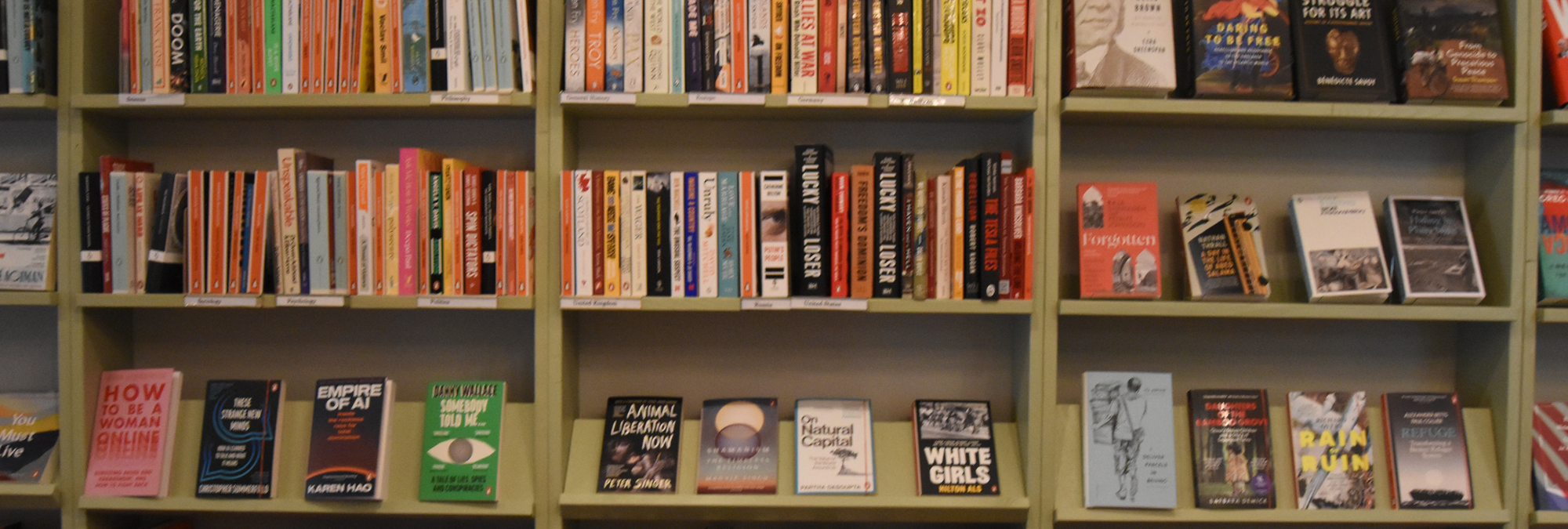
BERLIN, Germany – On a quiet afternoon in Berlin’s Charlottenburg district, the chime of a doorbell introduces visitors into the Marga Schoeller Bücherstube. The shop’s sage green façade contributes to the French neighborhood’s residential charms, and inside, high stucco ceilings and light fixtures from the original location loom over the English-language books that line many of the shelves.
Sandwiched between the Hotel Vivaldi and the Küchenladen Contractor Service, Marga Schoeller is celebrated as one of the city’s finest, most storied of independent bookstores, boasting an English-language alcove legendary among Berlin’s legions of book lovers. Yet, the serenity that is this literary oasis belies the shop’s and its founder’s precarious, even heroic past.
To pass through its doors is to step into a living memorial to quiet resistance: Schoeller and her shop defied the Nazi regime, survived the Allied Forces’ relentless bombings during World War II, and emerged as the intellectual heart of a divided city.

“You cannot separate Marga Schoeller from the history of Berlin,” said Stefan Liebermann, who has run the shop since 2015. “Everything you learn about Berlin gives you information about the store and the environment in which it grew.”
The origin story
On Nov. 1, 1929, in the twilight of the Weimar Republic, a fiercely independent 24-year-old woman from Münich, Marga Schoeller took over a small branch of the Büchholz bookstores on Berlin’s glittering Kurfürstendamm, or Ku’damm as it is called by its denizens, the Champs-Élysées of Berlin.
In Liebermann’s description, Schoeller possessed an innate understanding of the value of great literature and an unyielding moral compass. Under her guidance, the Bücherstube, or book room, transformed from a simple shop into a bustling salon for Berlin’s artistic avant-garde. Left-wing intellectuals, modern poets and daring playwrights gathered among its shelves to debate the ideas shaping Europe before, during and after the war.
But, the golden age of creative freedom proved brief. The National Socialists seized power in 1933, and the shadow of totalitarianism fell heavily over Germany’s cultural capital, including its many bookshops. The Nazis began burning books and dictating what citizens could read. German bookstores were forced to comply with strict censorship laws. Store owners were required to display propaganda and strip their shelves of “un-German” literature written by Jewish, socialist or dissident authors.
Marga Schoeller refused to cooperate. Without much fuss, Liebermann said, she went the other direction, removing Nazi-supported literature from her store display cases. Anything but a firebrand or activist in the traditional sense, Schoeller preferred instead to fly under the Nazis’ radar, Liebermann said, contesting the many accounts online of Schoeller as book ban-breaking provocateur. According to several sources online and at least one published history of the shop, rather than provoke with book title selections for the front windows, Schoeller filled them instead with landscape paintings and portraits of horses.
Home to the literati
Inside, however, her shop-as-sanctuary provided a safe haven for trusted customers, intellectuals and book lovers. Upon request, Schoeller or her loyal staff would quietly retrieve “subversive” works by Thomas Mann, Bertolt Brecht, Franz Kafka and others.
“Like no other bookseller, she bravely championed the cause of free books, even during the Nazi era, and is today considered one of the best and most capable booksellers in West Germany,” according to a history of the shop, 90 Years: Marga Schoeller Bookstore.

In its beginnings, the shop and its owner were considered to be drivers of the feminist movement that was changing Berlin, Liebermann said. A woman owning a bookstore in that period was improbable. But it helped that she came from money, which allowed her to finance the project. The rest is sheer will, Liebermann said, earning her the nickname, “the lion of Kurfürstendamm.” Schoeller most likely approved of this appellation, which was given to her by her husband; she put a poster of a lion outside her shop. Today, this sign, inspired by a circus poster and depicting a lion, hangs near the entrance to the store.
“She was a very strong woman,” Liebermann said. “She had a lot of ideas, so within a very few years, she made quite a successful business out of this.”
Somehow, Schoeller’s bookstore survived the air raids and even the catastrophic Battle of Berlin in 1945, and when the city was carved into four Allied occupation zones, Schoeller and her shop found themselves in the British quadrant.
Berlin’s infrastructure shattered and paper rationed, this was no time to operate a bookshop. Yet, the Brits seemed to recognize the bravery of the woman at Kurfürstendamm 30. At the very least, they had no reason to punish her and granted her the first license to sell English-language books in Berlin, a distinction Liebermann downplays.
“She was just passionate about the shop, so she found ways to get the books here,” Liebermann said. “This is of course still happening.”

A digital age
Getting hard-to-find books is still happening, but Liebermann said the digital age has forced the shop to alter its approach. People no longer need bookstores to stock whatever it is they need or are looking for, because digital sources are always at their fingertips. Book lovers and scholars and thinkers today need help sourcing hard-to-find books, which is Marga Schoeller’s specialty.
“One reason we moved is that we no longer need so much space,” Liebermann said. “We no longer need to have so many books physically in the shop.”
Julia Grosse, one of three employees who staff Marga Schoeller, said it is the interactions with customers that she enjoys most, especially helping them to get what they need.
“It’s interesting to try to find the right book for someone who’s not sure about the book yet,” said Grosse, who joined the shop in January last year. “It’s an honor.”
Grosse said she had known about Marga Schoellerfor some time and jumped at the chance to work there.

Grosse’s and Leibermann’s co-worker, Thomas Gralla, said he feels the same way. Having been in the business of bookselling since 1985 and now at age 63, Gralla said he was in the market for a new experience. Marga Schoellergave him exactly that for which he was looking.
“We are all part of a team with one idea here, the idea to develop a future for this bookstore, and so we work hand in hand,” Gralla said.
Like Grosse, Gralla said he enjoys sharing book recommendations with others and learning about the people who walk through the doors of the shop.
“When I’m very impressed with a special book, I know I can sell it,” said Gralla, who joined the shop in September last year. “I can bring my empathy to you and tell you about books that you may think are interesting.”
New location
Schoeller died in 1978, but her philosophy and ethos endure. She believed that everyone’s voice should be heard, Liebermann said. Despite being a conservative person, she allowed and even promoted a great variety of books. To this day, Marga Schoeller’s inventory consists of about 30% English books, which Liebermann said he considers to be Schoeller’s achievement, because she was so interested in English literature.
“It’s already quite an achievement that such a small business has survived for so many centuries, and this is also the sacrifice of the people who worked here,” Liebermann said.
‘Project Berlin’ multimedia elements:


Leave a Reply