

By Sara Ferro
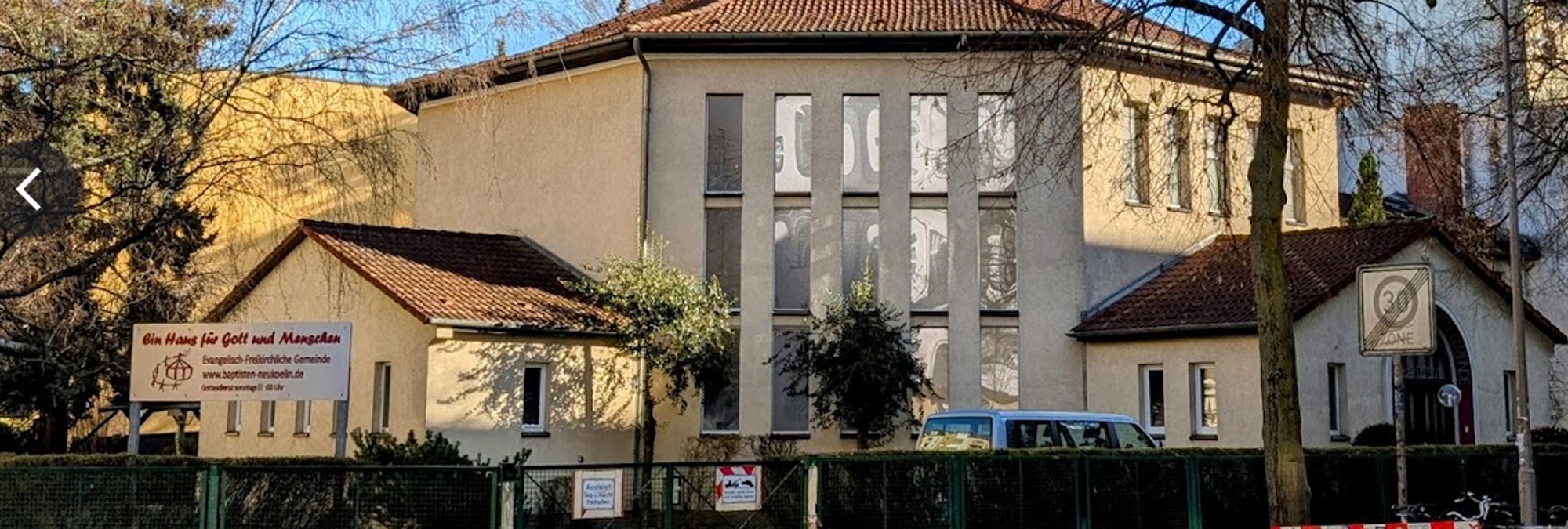
To hear the history of Kiezkirche Rixdorf, a postcard-pretty Baptist church in Berlin’s Neukölln neighborhood in Kreuzberg, is to hear in microcosm the history of Germany’s war-torn, wall-divided capital city.
The on-site caretaker of the church, Michael Löwe, is witness to both. A teenager living in east Berlin when the wall came down in 1989, he expressed humility and gratitude for the peace that today allows his church and its congregants to live out their faith.

Hitler and the Nazis “destroyed the country,” said Löwe, whose father and grandfather both were also members of the church, one of Berlin’s 20 Baptist churches. “Everything was lost, especially the churches,” to say nothing of synagogues and the people of the Jewish faith who attended them.

As Nazi rule unfurled across Europe, places of worship fell under the control of the Third Reich. People could no longer trust either the Catholic or Protestant churches, Löwe said. This scattered the many faithful flocks such that when the second world war ended, it was mostly smaller churches that returned, like tiny flowers sprouting up through cracked concrete.
“Maybe the small churches and in some ways especially the Baptist churches in East Germany were for me more powerful,” he said. “They were pure. They were not so rich like the churches in West Germany. They survived the worst.”
High water mark
An Allied Forces bombing raid destroyed the church in 1945, and one of that raid’s bombs presented in the sanctuary as a monument to the past reminds church-goers of the destruction. The fragment is just left of the altar at the front of the sanctuary, “a sign of the dark times of Germany,” was a gift from the post-war governing authorities of Berlin who had recovered it from the wreckage, according to Jens Kämereit, a deacon of the church.

After the war, the re-building effort proved successful for the now-100-year-old Kiezkirche Rixdorf. Weekly attendance swelled to 250 to 300 faithful every week in the late 1950s and early 1960s, according to Kämereit, who has been a regular attender since moving to Berlin three years ago; he lives in an apartment owned by the church.
Kämereit said attendance grew in the smaller churches not only because of the lack of trust in the larger ones but because it was a period of such wholesale change.
“The money was getting smaller, but the pain of the people and their thirst for truth grew bigger,” he said.
The church building that now anchors the middle of Neukölln, with its manicured lawns and beautiful garden, is a picture of rebirth.
“This is our new church,” said Löwe, whose nephew-in-law is a pastor there, making the bomb a symbol and a commemoration. The bomb on display reminds all that we “don’t make war, [we] keep peace,” he said.
Silver lining
Kämereit is more circumspect.
“Is there something good in the destruction?” he asked rhetorically. “I think, yes. The circumstance of destruction is, of course, terrible. But [today] we get to be Germans; we get freedom; we are free from our dictator.”

This sense of sacrifice for the sake of the greater good of Europe, he said, now is “the spirit of the bomb.”
Rebuilding the church required the better part of a decade, Kämereit said, allowing the church to re-open in the 1950s. While Berlin Wall ensured that many members could not continue attending, the church otherwise was free to conduct worship services in what was the American quadrant of the parceled city.
“We always had the easy life,” Löwe said. “We were not so rich, but we have freedom.”
Perhaps counter-intuitively, as the German economy improved, the numbers of attendees began shrinking, and little was done to prevent the declines, Löwe said. Even less was done after the wall came down, and that should have been a time of active outreach and tremendous renewal, he said.
Missed opportunity
Löwe said a change in leadership of the church is to blame for the missed opportunities. The church had a young, energetic head pastor from America just before the wall fell, but that pastor left after only three years. A soon-to-be-retired pastor took over just as the impossible occurred and re-unification was effected, but that pastor did not have the vision or the energy to take advantage.
“We didn’t have a real preacher who could go out on the streets and use this great chance,” Löwe said.
More recently, like all places of worship in Berlin and elsewhere, Kiezkirche Rixdorf had to endure the pandemic. Church leadership kept the doors open; Berlin city officials declared places of worship as only those buildings exempt from closure ordinances that otherwise effectively shut the city down.

With only about 30 regular attenders, the future of the church is an open question. Funded mainly by revenues from an apartment building the church owns nearby, and enjoying the benefits of no debt and ownership of its buildings, the question isn’t a fiscal one. The question has to do with from where growth will come.
“We try to keep this church running with small money, with our own power, with the grace of God, and with some people who help us,” Löwe said.
For Kämereit, the future will be determined by the work and revelation of the Holy Spirit. He said he has no doubt of it, believing that the church will grow again to its high water mark of 250 to 300 weekly attendees within the next five years.
“If it’s in mind you think about the Holy Ghost, the Spirit, that this is the right way,” he said. “Then the growing process is faster than 150 in three years. The Spirit will guide us. How? I don’t know. But, the Spirit will guide us.”
‘Project Berlin’ multimedia elements:


Leave a Reply