

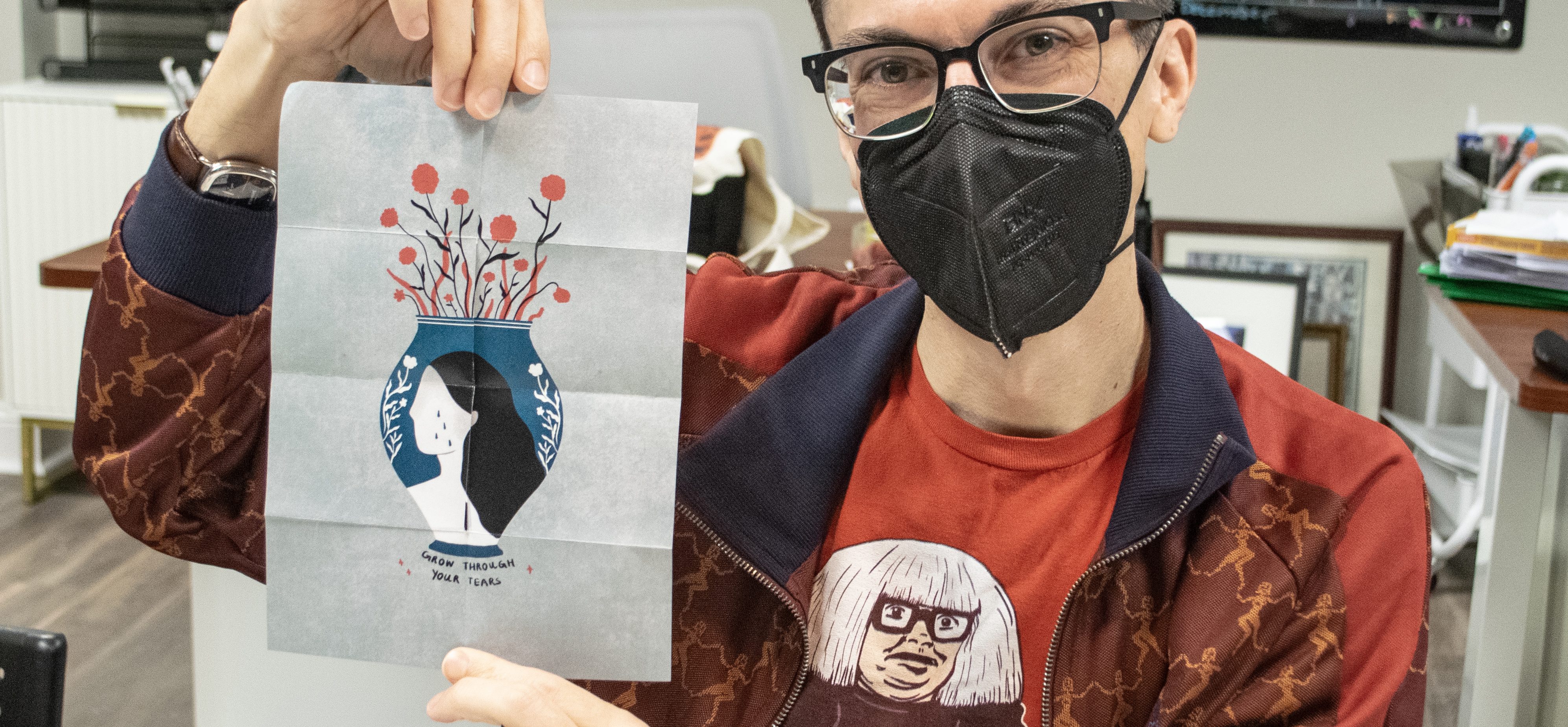
Ava Mumaw, asst. arts & living editor
While Berry offers a variety of clubs, one organization students may find to be a nice creative outlet is the Zine Club. Founded by sophomore Ellie Bossier and faculty sponsor Thomas Ratkos in February of 2026, Zine Club allows students to channel their creative skills in making zines.
Sophomore Anna Davis has served as Zine Club’s vice president since its founding and said what a zine a zine.
“[Zines] are basically a self-published magazine,” Davis said. “The history of zines is often pretty political because you can’t publish a lot of things in mainstream magazines because of different forms of censorship. [Zines] are pretty popular in the punk scene.”
Ratkos, Associate Professor of Psychological Sciences and Director of Applied Behavior Analysis, said zines can be used to help students feel empowered to voice their opinions on any topic and is more than just an art medium, but a form of self-expression as well. Zine Club was founded on these beliefs and works to inspire students to share their voice.
“When this new student [Bossier, Zine Club president] started showing me their zines, I immediately wanted this to become something bigger,” Ratkos said. “I want students to be able to express themselves and feel empowered.”
Ratkos said there are plenty of benefits in becoming a member of Zine Club. Firstly, Zine Club works as a judgement-free creative space so that there are no limits on what a student may discuss within their zines. This is especially useful since censorship is heightened in virtual think spaces such as Instagram or TikTok.
“[Zines have] the size and accessibility of what we expect from social media,” Ratkos said. “It’s physical, self-expressive, creative and doesn’t have the same kind of boundaries [as social media]. You can get banned from Instagram, but you can’t get banned from writing things down on paper and folding that paper into a little book.”
Sophomore Kaden Mckenzie is a current organizing officer of Zine Club. He talked about how Zine Club works as a safe space for people of all backgrounds to come in and share their voices with others.
“[Zine Club is] a very open and safe space, no matter who you are or what your life is like,” Mckenzie said. “I think it’s a really easy space to make friends. You can have the new opportunity of using zines as an expressive outlet or just enjoying the zines that other people make.”

Ratkos also talks about how zines can be easy to distribute. Their small size can be easier for a general audience to digest over other kinds of content like full-length magazines or documentaries, which can expand the size of the creator’s general audience.
“With how busy students are they say, ‘Well, I don’t want to sit down and watch this whole documentary or read this whole book, but I can flip through an eight-page zine that’s made by another student who cares about some issue and get something out of it,’” Ratkos said.
Zine Club offers the opportunity to learn more about the medium from artists experienced in zine creation. On Nov. 5, Zine Club welcomed artist Amanda Banks who demonstrated various new methods of zine creation.
“[Banks] came and showed us some different styles of zines that I was not familiar with,” Ratkos said.
Mckenzie was one of the several members who attended Banks’ demonstration. He said one of his favorite zine creation methods Banks taught was one where the zine is folded so that it looked like a 3D model of a room which highlighted the more artistic aspect of zines.
“She showed off a zine where you could cut the paper to be like different rooms,” Mckenzie said. “She essentially showed us zines that could be shown off as art pieces in and of themselves rather than just little booklets.”
Mckenzie also mentions how Banks’ talk inspired him to create his first zine to share a message on themes of racism and police brutality in America.
Ratkos said Banks’ talk at Zine Club was particularly impactful because it not only taught experienced members new methods of making zines but also helped students who were not as familiar with zines learn how to make them.
“It was a a really nice cultural exchange between the students on campus, some of whom are very artistically talented and have made a lot of zines and some students who were showing the first zine they ever created to this experienced artist,” Ratkos said.
Staying true to the accessibility of zines, students of all skill levels are welcome to become members of Zine Club, whether they have experience making zines at meetings or have not even heard of a zine prior to attending a meeting.
“Zine Club and zines in general are available for any kind of artistic ability whatsoever,” Mckenzie said. “We tend to have blank zines, so you can just have an idea and put it onto a blank [zine],” Mckenzie said.
If a student wishes to become a member of Zine Club, Davis said they can check out the club’s Instagram @berry.zines for updates Students can also check out the Think Space in downstairs Krannert on Thursdays to see if the club is meeting and join a meeting at 6:00 p.m.
Students can also support the Zine Club and its members by reading some of the zines displayed throughout campus.
“There’s little zine hubs around campus,” Davis said. “On the second floor of Laughlin and Evans [there are] display holders. There are also QR codes on the back of the zines so you can join our GroupMe.”
As well as creating an area for self-expression, Zine Club has also built a close community since its beginning. Students can attend meetings not just for the excitement of creating and reading zines, but also to engage with other members of the club and exchange ideas without fear of judgement.
“I came into it not necessarily expecting to be as into it as I was,” Mckenzie said. “But at this point I really enjoy Zine Club and I enjoy the people in it and I’ve made some really good friends through putting myself out there enough to show up. I would recommend other people do the same.”


Leave a Reply